
Introduction
Not everyone wants to stare at price charts all day. And honestly, you do not need to.
For many people, constantly checking crypto prices leads to stress, bad decisions, and burnout.
If you believe in crypto long term but hate the emotional rollercoaster, you need a system that works quietly in the background. A plan that removes daily decision-making and lets time do the heavy lifting. This article breaks down a realistic, low-maintenance crypto strategy for people who want exposure without obsession.
Why Most People Lose Money Watching Charts
Checking charts all day feels productive, but it often leads to three problems:
•Emotional buying during pumps
•Panic selling during dips
•Overtrading that eats returns through fees and mistakes
Markets move faster than emotions can keep up with. If your strategy depends on perfect timing, it will fail eventually. A “set it and forget it” plan is not lazy. It is disciplined.
The Core Idea Behind a Hands-Off Crypto Strategy
The goal is simple, Make decisions once, automate them, and step away. This approach works best if:
•You believe crypto has long-term value
•You are not trying to trade short-term price swings
•You want steady participation without constant stress
Instead of reacting to the market, you build a structure that stays consistent regardless of headlines.
The 3-Pot System: A Simple Way to Organize Your Crypto
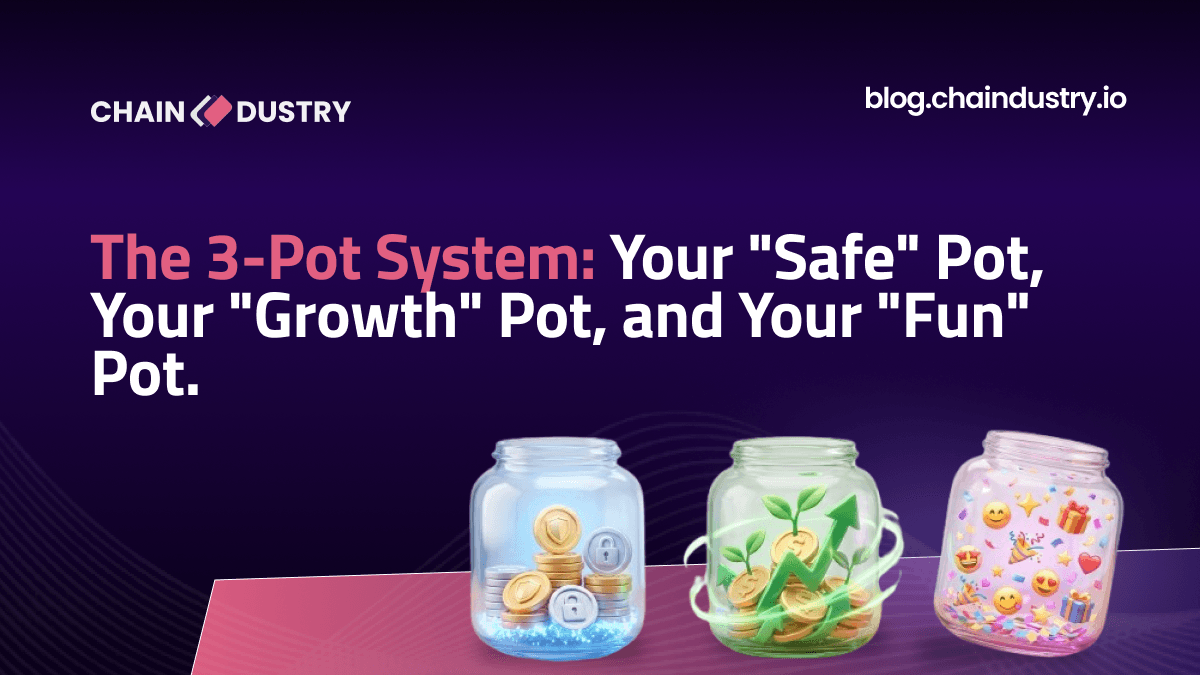
This system divides your crypto into three clear purposes. Each pot has rules, and those rules protect you from emotional decisions.
1. The Safe Pot
This is your foundation. It usually contains assets you believe will survive multiple market cycles.
Typical examples: •Bitcoin
•Ethereum
•Major stablecoins
Rules for this pot:
•Long-term holding mindset
•No frequent buying and selling
•Stored securely, preferably in self-custody
This pot is about preservation, not excitement.
2. The Growth Pot
This is where you take calculated risks. Examples include:
•Strong Layer 2 projects
•Infrastructure tokens
•Established DeFi protocols
Rules for this pot:
•Clear entry plan
•Limited position sizes
•Regular but infrequent reviews
If this pot grows, great. If it struggles, it does not sink your entire portfolio.
3. The Fun Pot
This is where curiosity lives. It might include:
•Small experimental tokens
•NFTs
•New ecosystems you want to explore Rules for this pot:
•Only money you can afford to lose
•No emotional attachment
•No adding more funds unless you planned it
This pot scratches the itch without damaging your core strategy.
Automating the Plan So You Can Walk Away
The real power of this strategy comes from automation. Here is how people simplify it:
•Use dollar-cost averaging instead of lump sums
•Set fixed buying dates instead of reacting to price moves
•Limit portfolio reviews to once a month or quarter
Once the system is running, your main job is to not interfere.
How Often Should You Check Your Portfolio?
Less than you think. A healthy schedule looks like this: •Monthly glance to confirm nothing is broken
•Quarterly review to rebalance if needed
•Annual deep review to reassess goals
If you are checking prices daily, the system is not truly set and forgotten.
Common Mistakes That Break the Strategy
Even simple plans fail when people break their own rules. Watch out for:
•Moving funds between pots impulsively
•Increasing risk during hype cycles
•Abandoning the plan after short-term losses
Consistency matters more than cleverness.
Conclusion
You do not need to be glued to charts to succeed in crypto. A calm, structured approach often outperforms emotional trading over time.
The “set it and forget it” plan is not about ignoring crypto. It is about respecting your time, protecting your peace, and letting long-term thinking win. Build the system once. Trust it. Then go live your life.