
Introduction
In recent years, blockchain technology has entered the conversation as a potential solution to many of these long-standing challenges. Best known for powering cryptocurrencies like Bitcoin, blockchain is now being explored as a tool for strengthening democratic processes. The idea of “voting on the blockchain” represents a bold experiment in digital democracy—one that could redefine how citizens participate in governance.
Understanding Blockchain Voting in Simple Terms
At its core, blockchain is a decentralized digital ledger. Instead of storing information in a single central database, blockchain distributes records across a network of computers (called nodes). Once data is recorded, it becomes extremely difficult to alter without detection. This combination of transparency, immutability, and decentralization is what makes blockchain attractive for voting systems.
In a blockchain-based voting system, each vote is recorded as a transaction. These transactions are encrypted, timestamped, and added to a chain of previous votes. Ideally, this ensures that votes cannot be tampered with, deleted, or secretly altered after they are cast. Voters can verify that their vote was recorded correctly, while the overall system maintains anonymity.
While the concept sounds promising, theory alone is not enough. Real-world testing is essential to determine whether blockchain voting can truly work at scale.
Where and How Blockchain-Based Voting Has Been Tested
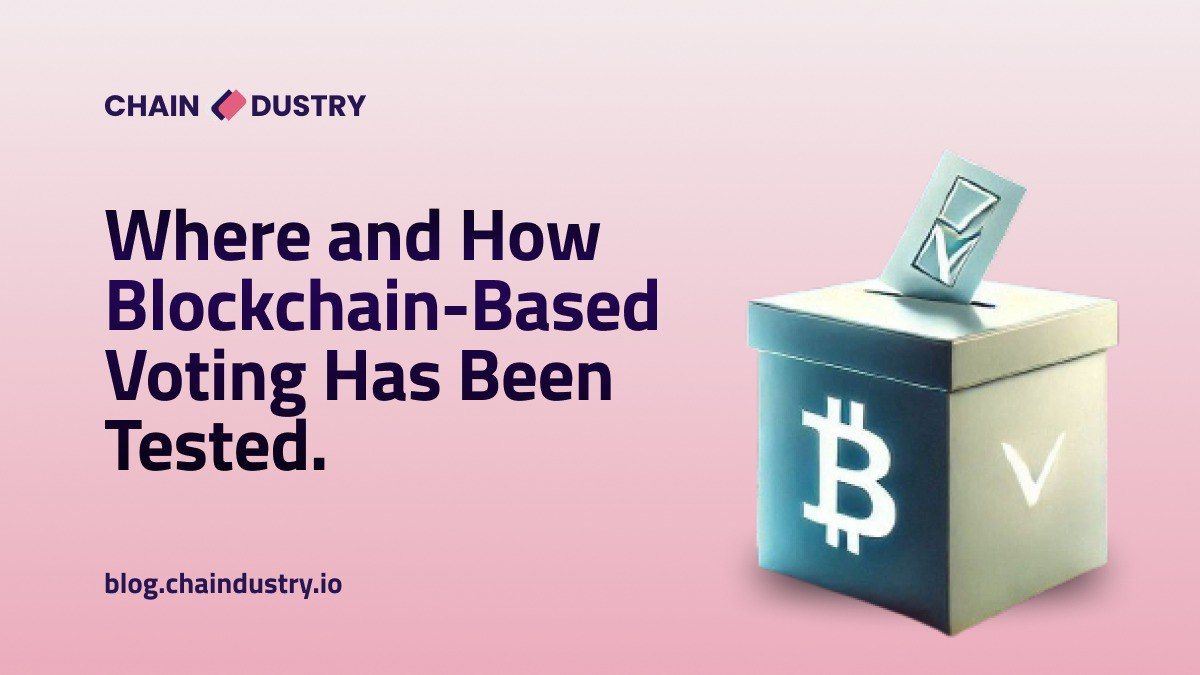
Although blockchain voting is still in its experimental phase, several countries, organizations, and institutions have conducted pilot projects and limited trials to explore its feasibility.
Estonia: A Digital Pioneer Exploring New Frontiers
Estonia is widely regarded as one of the most digitally advanced countries in the world. It already allows citizens to vote online in national elections using a secure digital ID system. While Estonia has not fully adopted blockchain voting for public elections, it has experimented with blockchain-like technologies to secure public records and enhance election integrity.
The Estonian case is important because it demonstrates how a strong digital identity infrastructure is a prerequisite for blockchain voting. Without reliable digital identification, verifying voters while preserving anonymity becomes extremely difficult.
West Virginia, USA: Voting for Overseas Citizens
One of the most cited real-world blockchain voting experiments took place in West Virginia in 2018. The state allowed military personnel stationed overseas to vote using a blockchain-based mobile application in a pilot program. The system aimed to reduce delays, lost ballots, and logistical challenges associated with absentee voting.
While the pilot was limited in scale, it showed that blockchain voting could improve accessibility for specific groups, especially those who face barriers to traditional voting methods. However, cybersecurity experts raised concerns about potential vulnerabilities, highlighting the need for rigorous testing and oversight.
Switzerland: Local-Level Experiments
Switzerland, known for its strong culture of direct democracy, has explored blockchain voting at the municipal level. Some Swiss cantons have tested blockchain-based systems for local referendums and community decisions. These trials focused on transparency and verifiability, allowing voters to confirm that their votes were counted without revealing their identity.
The Swiss experiments emphasize an important lesson: blockchain voting may be more suitable for smaller-scale elections or referendums before being considered for national elections.
Corporate and Organizational Voting
Beyond government elections, blockchain voting has seen more adoption in corporate governance and organizational decision-making. Shareholder voting, university student elections, and professional associations have used blockchain platforms to conduct secure and transparent votes.
In these environments, the risks are lower than in national elections, making them ideal testing grounds. These use cases demonstrate that blockchain voting can reduce administrative costs, prevent duplicate voting, and increase trust in outcomes when implemented correctly.
Potential Benefits of Blockchain Voting
Proponents of blockchain voting argue that it offers several compelling advantages. Transparency is one of the most significant benefits, as all transactions are recorded on a public or permissioned ledger that can be independently verified. This could reduce disputes over election results and increase public trust.
Accessibility is another major advantage. Blockchain voting could allow citizens to vote securely from anywhere in the world using a smartphone or computer, potentially increasing voter turnout among young people, people with disabilities, and those living abroad.
Additionally, blockchain systems can reduce the cost and complexity of organizing elections by minimizing the need for physical infrastructure, paper ballots, and manual vote counting.
Challenges and Ethical Concerns
Despite its promise, blockchain voting is not without serious challenges. Cybersecurity remains a major concern. While blockchain itself is resistant to tampering, the devices used to cast votes—such as smartphones and computers—can still be hacked or compromised.
There are also concerns about digital exclusion. Not everyone has access to reliable internet, smartphones, or digital literacy. Introducing blockchain voting too quickly could unintentionally marginalize vulnerable populations.
Finally, trust is a social issue, not just a technical one. For many citizens, understanding and trusting a complex technology like blockchain may be difficult, especially in societies where trust in institutions is already low.
The Future of Digital Democracy
Blockchain-based voting is not a magic solution that will instantly fix all problems in democratic systems. However, ongoing experiments around the world show that it has the potential to complement existing voting methods when used carefully and responsibly.
Rather than replacing traditional elections outright, blockchain voting may first find its place in local elections, organizational governance, and special voting groups. As technology improves, regulations evolve, and public understanding grows, blockchain could become a powerful tool in the ongoing effort to strengthen democracy in the digital age.
In the end, the question is not just whether we can vote on the blockchain, but whether we can do so in a way that is secure, inclusive, and worthy of public trust.